
A VPN protects Internet traffic by encrypting it and masking your IP address, while antivirus software protects your device by detecting and blocking harmful programs. Each tool solves a different security problem, and most users rely on both for complete protection.
Understanding the Two Pillars of Digital Security
A VPN secures Internet traffic. Antivirus secures the device. A strong security setup covers both your Internet connection and your device. VPNs and antivirus tools handle different parts of that job. They work well together, but each solves a separate problem.
What a VPN Does
A VPN protects your Internet traffic while it travels between your device and the sites or services you connect to. It does this by routing data through an encrypted tunnel and masking your IP address. That makes it harder for third parties to trace your activity back to you or monitor your online activity.
A VPN is beneficial on public Wi-Fi, where attackers often look for unprotected connections. With an encrypted tunnel in place, any intercepted data is unreadable.

However, a VPN does not prevent malicious programs already on a device, nor does it scan your system for threats.
What Antivirus Software Does
Antivirus tools focus on the device itself. They scan local systems for malicious code, including ransomware, spyware, Trojans, and other threats. These tools watch for suspicious behavior and block harmful actions before they spread.
Traditional antivirus tools sometimes flag risky links, but Privado Sentry does not block phishing links. Its role begins once harmful activity reaches the device, focusing on detecting and stopping actions that indicate ransomware, spyware, or other threats.
What they do not do: hide your IP address or encrypt your Internet traffic.
How They Differ in Real Examples
- Using coffee shop Wi-Fi: A VPN protects the traffic between your device and the Internet. Antivirus does not provide that network protection.
- Opening a harmful file: Antivirus blocks and removes the threat. A VPN does not prevent it.
- Clicking a fake link: PrivadoVPN’s Threat Protection can block access to known malicious sites before you reach them. Privado Sentry does not prevent you from clicking the link, but it can respond if the site or the resulting program attempts to perform harmful actions on your device.
VPN vs. Antivirus: Quick Comparison Chart
| Feature | VPN | Antivirus |
| Primary Goal | Protects Internet traffic and masks IP address | Protects device from harmful programs |
| Core Method | Encrypted tunnel between device and Internet | Scans system, detects and blocks threats |
| Protects Against | Network snooping, tracking, unsafe Wi-Fi | Malware, ransomware, spyware, Trojans |
| What It Doesn’t Do | Remove harmful programs on device | Encrypt Internet traffic or hide IP |
| When It Helps Most | Public Wi‑Fi, privacy, identity masking | Stopping harmful programs before they spread |
Main Differences Between a VPN and Antivirus
- A VPN protects Internet traffic; antivirus protects the device.
- A VPN hides your IP address; antivirus blocks harmful programs.
- A VPN defends data in transit; antivirus stops threats already on the system.
- A VPN addresses network-level risks; antivirus focuses on system-level security.
Which One Do You Need?
Most people benefit from using both. A VPN protects everything you send or receive over the Internet, while an antivirus protects the device itself. Used together, they create layered protection.
What Privado Sentry Adds to Your Security Stack
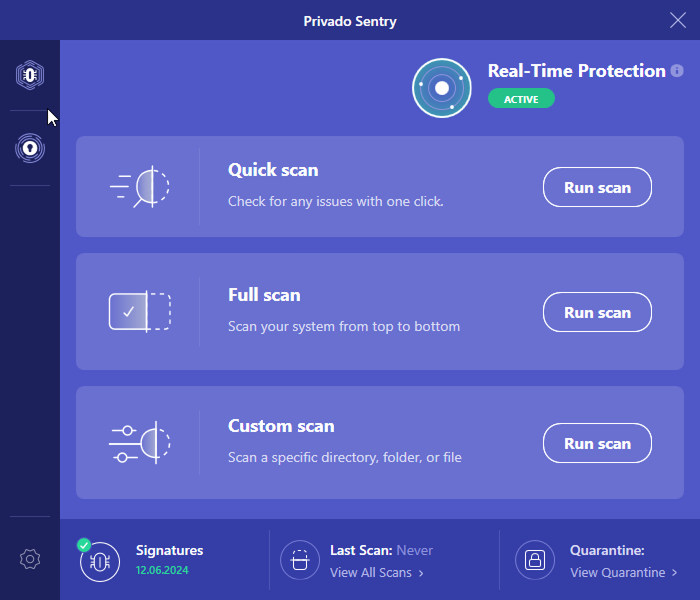
Privado Sentry provides device‑level protection through behavioral monitoring, ransomware defense, and real‑time threat response. It does not stop you from clicking a malicious link, but it does respond if harmful activity follows. It focuses on stopping harmful actions before they spread.
Why PrivadoVPN Improves Your Security Setup
PrivadoVPN provides fast, reliable encryption across all major platforms and includes advanced security features such as:
- Kill Switch to stop traffic if the connection drops
- SmartRoute for selective traffic routing
- Threat Protection to block unsafe sites
- Secure DNS and Parental Controls through Control Tower
- PhantomMode for added anonymity
Pair it with Privado Sentry, which adds strong device protection, behavioral monitoring, and real‑time threat identification. Sentry monitors your system for ransomware, spyware, Trojans, and other malicious activity. It analyzes activity rather than relying only on signatures, helping it stop newer or modified threats before they spread. The combination provides secure Internet traffic and protection against harmful programs.
Strengthen Your Security With PrivadoVPN + Privado Sentry
PrivadoVPN Premium gives you strong encryption, Kill Switch protection, SmartRoute, Threat Protection, Secure DNS, Control Tower features, and PhantomMode. Paired with Privado Sentry, you build a layered setup that protects both your connection and your device.
Frequently Asked Questions
A VPN protects Internet traffic, while an antivirus protects the device from harmful programs.
Yes. One protects your Internet connection; the other guards against harmful programs.
No. A VPN does not scan for or remove harmful programs.
It analyzes system activity, blocks malicious actions, and responds to threats such as ransomware and spyware.
No. Only a VPN masks your IP.
Final Breakdown
A VPN protects the connection. Antivirus protects the device. Together, they close major gaps in your day-to-day security. PrivadoVPN Premium brings strong encryption and advanced features that reinforce your privacy every time you go online.